| Home |

|

|

|

|
Online Store |

|

|

|

|
Representatives for manufacturers of municipal and industrial water and wastewater treatment equipment and environmental systems, serving Iowa and Nebraska. Our online store serves the world.
municipal water treatment municipal wastewater treatment industrial water treatment industrial wastewater treatment power plants wastewater pumps water pumps sludge pumps progressive-cavity pumps lift stations pressure boooster stations sluice gates slide gates flap gates expansion joints anaerobic digesters baffle curtains belt filter presses clarifier covers dissolved air floatation enclosures gravity belt thickeners lagoon covers lagoon liners mixers sand filters soil-reinforcement geotextiles tanks (fiberglass) turbidity barriers ambient air monitors toxic gas sensors water quality monitors portable pumps portable gas monitors chlorination tablets sump pumps
|
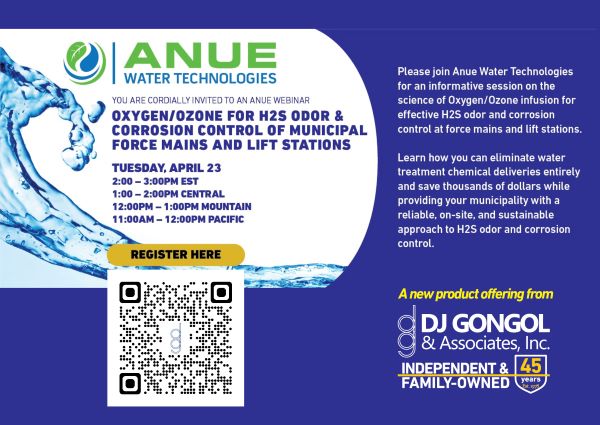
How to reduce hydrogen sulfide and control corrosionWe invite you to a free webinar on April 23rd about how to reduce hydrogen sulfide production in collection systems and control the resulting corrosion that eats away at pipes, valves, and equipment. It's possible using on-site generation of oxygen and ozone, available as a turn-key system for a flat monthly charge. Register now!
Double-header at the Nebraska Rural Water ConferenceWe're honored to have been invited to deliver back-to-back presentations at the Nebraska Rural Water Conference on March 12th in Kearney. Please join us if you can!
Come to the Iowa AWWA Short Course on March 6thRegister to attend the Iowa Section AWWA Spring Short Course on March 6th and catch our presentation "Controlling Your Surges" in the water distribution track.
Aeration from AfarSmall wastewater plants and lagoon systems needing to meet tougher effluent-quality standards may find themselves in need of additional aeration that their existing facilities are poorly-equipped to supply. A technological solution that takes up almost no space, requires little to no earth work, and can be easily operated and maintained is available. Here's what we presented today at the IAMU Water/Wastewater Operators Workshop:
Introduction to Pump HydraulicsIn case you missed this presentation at the Nebraska Section AWWA Fall Conference yesterday:
Energy Policy is Water PolicyThe nexus between energy policy and water policy hasn't gotten the amount of attention it deserves, and that's something the water sector needs to change. Delivered today at the Nebraska Section AWWA Fall Conference:
Preserving Institutional Memory in a UtilityFresh from the Iowa AWWA Annual Conference today in Des Moines:
The future of the water workforceJoin us tomorrow at the Ankeny Annual Water Conference, where we will be presenting the topic "Ten Steps to a 21st Century Water Workforce". Remember, we have scores of presentations appropriate to the water sector, from management and customer-service topics through highly technical sessions on pump applications, all delivered by an experienced industry expert with a graduate degree in education. Contact us to schedule your choice of talks at a conference or training workshop. Dealing with Mother Nature's Attitude Problem
Delivered yesterday at the Kirkwood Annual Water Conference in Cedar Rapids, Iowa. 25 Ways to Screw Up a Lift Station DesignThrough the careful study (and avoidance) of failure, engineering can make use of the past to improve on the future. Pump station design is no exception. Join this speedy trip through 25 entirely avoidable screwups to see how things can go wrong -- and learn how to make sure they go right next time.
(This presentation was delivered today at the Iowa Water Environment Association meeting in Waterloo.) South Sioux City's new treatment plantThe new wastewater treatment facilities at South Sioux City, Nebraska, got a write-up in the Sioux City Journal. The project features four Gorman-Rupp Super T Series pumps, one of which you can see in the article's photo of the new boiler room (look for the blue machine next to the wall -- it's working hard to circulate water to and from the lagoon). Breaking the Conveyor-Belt Myth
One week from todayOne week from today, we hope to see you at the Great Plains Waste Management Conference in La Vista, Nebraska. Join us for two educational presentations: In the first session, "Breaking the Conveyor-Belt Myth" at 9:30 am, you'll learn about the vital perspective shift that we in the wastewater sector need to project to the general public so that they can truly begin to grasp what we mean by "one water". In "The Maintenance You Don't Have to Touch" at 2:30 pm, you'll learn about how (and why!) to approach cybersecurity as a maintenance responsibility inside public utilities. As with all of our presentations, we consider it our duty to make sure attendees leave with useful steps they can apply right away to make their work better, smarter, and safer. April showers bring...water-industry presentationsJoin us at the Great Plains Waste Management Conference in La Vista, Nebraska on April 13th for "Breaking the Conveyor-Belt Myth" & "The Maintenance You Don't Have to Touch" (cybersecurity as a maintenance practice). Registration is open for discounted pricing through April 5th. Upgrade your old lagoonsGorman-Rupp's EchoStorm Venturi aeration system is an exciting merger of Gorman-Rupp pumping reliability with the flexibility of tank-side or lagoon-side aeration. Instead of filling a tank or a lagoon with large grids of aerators, the EchoStorm drops nothing more than an inlet pipe and an outlet pipe into the water. These can be configured or even moved as needed in order to achieve aeration in the right places at the right times inside the basin. But with the pump, motor, controls, and Venturi aerator all mounted safely on dry land, everything can be managed safely and conveniently, even by a lone operator. If you're trying to upgrade the treatment within an existing lagoon system, the EchoStorm is a compact and easy option -- and when combined with simple floating baffle systems, you can turn even an old facultative lagoon into a multi-stage treatment system with minimal earthwork, piping, or equipment. Contact us for more information. Vertical-turbine pumpsWhether you need to move 50 gpm or 30,000 gpm of water out of a well (or anything in between), we have vertical-turbine and submersible well pumps to do the job. Standing in the way of the shortest pathThe shortest path between two points, as everyone knows, is a straight line. And everyone knows that water is, in a sense, lazy -- it follows the path of least resistance as it seeks its own level. This knowledge is highly applicable in the world of pipes and open channels, of course, but it's also enormously important when thinking about flow through tanks and lagoons. Unless we force it to take a different route, water will tend to seek the shortest distance from inlet to outlet. And if a tank or lagoon is being used to apply treatment (like aeration), the result can be a truncated path from inlet to outlet, resulting in two problems: Dead zones where the water sits and stagnates, and water that encountered only the shortest period of treatment before it exited.
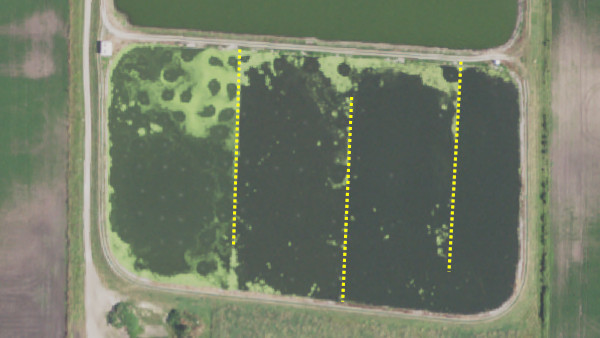
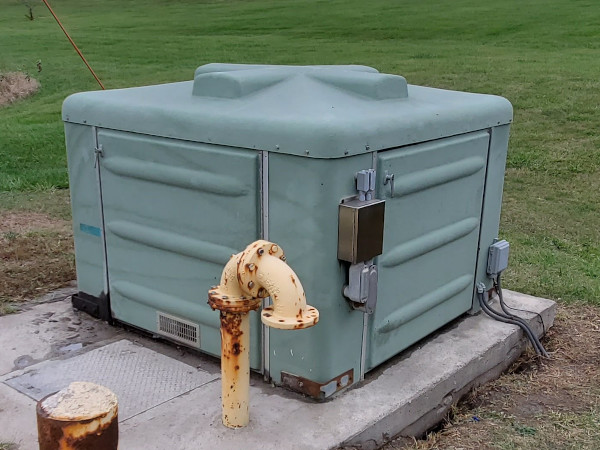
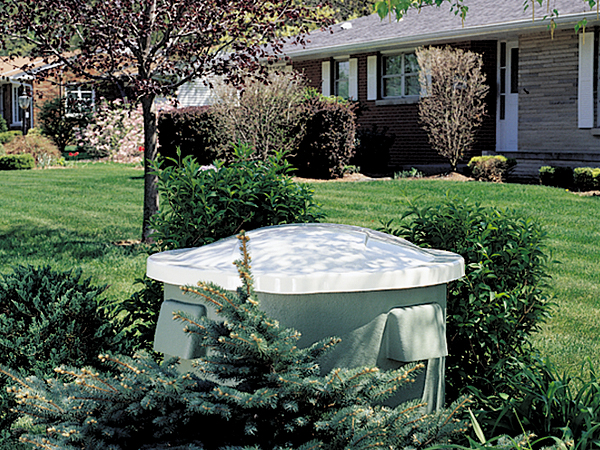
Look at how the water quality improves as the water flows from left to right in this lagoon, forced by the three baffle curtains (noted with yellow dots) to take a long, meandering path over lots of aerators. Also note how the algae still grow around the edges of the lagoon (where the water depth is lower) and in corners (which are miniature dead zones). These baffles are making a big difference to the ultimate treatment quality inside this lagoon. Baffle curtains are a smart, cost-efficient way to ensure the maximum useful treatment within a tank or lagoon. Using durable, lightweight geomembranes suspended either from a frame (in a tank) or floats (in a lagoon), baffle curtains can redirect the flow of water so it crosses the largest number of aerators or has the maximum contact time with chemicals like chlorine. Baffle curtains deserve a first look anytime a system needs to perform better -- learn more in the baffle curtain section of our site or contact us for application assistance. Have you tried unplugging it?If your computer malfunctions, you'll probably be asked if you've tried unplugging it and giving it a reboot. It turns out the same advice can be applied to piping systems inside water and wastewater systems: Have you tried unplugging it? Not by removing power, but by installing bidirectional knife-gate valves in place of plug valves. The Wey knife-gate valve design is an excellent option for flow isolation in applications where the water may contain solids or suspended materials. They are bidirectionally bubble-tight -- which means they can isolate in either direction, without any need to orient the valve in a particular direction. That's a big advantage over plug valves, which must seat with the help of pressure coming from upstream. Wey's knife-gate valves also weigh only a fraction of what comparable plug valves weigh: A 4" Wey Model VM with a handwheel operator weighs only 27 lbs., compared with a typical 4" plug valve that weighs 72 lbs. or more. The difference grows even more dramatic in larger valve sizes. Valves that weigh less are easier to install, easier to operate, and easier to maintain -- plus, they ease pipe strain. Learn more in our knife-gate valve pages, or contact us for estimates, dimensions, pricing, or application assistance. Don't haul what you can dewaterWith fuel prices rising and labor shortages breaking out everywhere, it may be time to consider a long-term solution to the costs of hauling away municipal sludge. Payback periods on the initial equipment cost can be very fast, especially with price inflation making it more and more expensive to haul the material away. And since Iowa and Nebraska have some of the lowest electricity costs in the country, those payback periods can be even faster than elsewhere. Learn more in our belt filter press section or contact us anytime for information like sizing, estimates, or cost-benefit analysis reports. Go big (or go small, whatever works for you)Criss-cross the states of Iowa and Nebraska (our home turf) and you'll see scores of Gorman-Rupp lift stations enclosed in tidy little 6' x 6' packages. They're often affectionately called "doghouse" enclosures, since they're just big enough to pack the pumps, motors, controls, and valves inside -- not large enough to for an operator to get inside. These are cost-efficient and safe lift stations: Nobody has to enter a valve vault or hang out leaning over the side of an open wetwell hatch in order to access the pumps, valves, or other equipment. But don't forget that Gorman-Rupp ReliaSource® lift stations are available in a wide range of configurations, including not only 6x6, but also 7' x 10' designs with a slide-off cover, 8' x 12' stations (still compact, but accommodating for operators to stand inside) and the "Modular" station series, which can handle up to 5,200 gpm and offer wide-open spaces for operations, maintenance, and even storage. Learn more from our brochure or contact us with your parameters to get helpful application assistance.
Floating aeration vs. iceIn addition to their ability to make a big difference in lagoons and large tanks with their capacity to provide both aeration and mixing, it's worth noting that floating aerators (and their cousins, submersible aspirators) can be used to control ice buildup. By keeping the water surface agitated, they discourage the formation of ice. If you're looking to install a new mechanical aeration system or retrofit or replace an existing installation, Fluence has options and we will be happy to help you find the right one. Temperatures change. Do your blowers change with them?According to historical records, we're just reaching the bitter end of the typical low point for annual temperatures. For most of Nebraska and South Dakota, the average coldest day of the year is between January 16th and January 20th, and for almost all of Iowa, it's between January 21st and January 25th. From this point forward, the days will mostly be growing warmer. Temperature has a big impact on wastewater aeration: Colder air is denser air, and colder water holds more dissolved oxygen than warm water. Thus, the demand for aeration is generally lowest right about now -- and will increase as both air and water grow warmer moving towards the middle of the year. The difference in horsepower required to achieve the same DO levels in treated wastewater can be substantially less in the winter than in the summer, and with thoughtful application and good control systems, engineers can design systems that give operators (and utility owners) significant electrical savings by adjusting to those temperature swings. Every unit of horsepower counts: At 10 cents per kilowatt-hour, dropping aeration demand by just 10 hp for six months out of the year could save well over $3,000. Switching to VFD-controlled high-efficiency centrifugal blowers can have a fast payback period, especially when other financial resources like grants and low-interest loans for energy efficiency are available. Check out our presentation on blower throttling for more details and contact us for more information on free energy audits and technical application assistance.
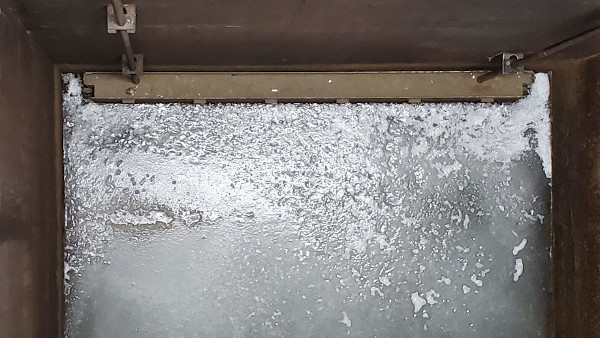
Hard freezeOne of the advantages of stainless steel as a material for slide gates is that it stands up well to tough conditions -- like when a basin freezes. It's better never to let the water freeze at all, but if there's any chance of it, stainless steel has a decided advantage over cast iron or fiberglass. (Remember: Water expands when it turns into ice. Expanding ice can crack fiberglass, and once cracks develop, the FRP gate itself is going to need repair.) We decided to wait for warmer weather to perform any further inspections on this one.
Water quality monitoring, simplifiedMunicipal water systems can simplify their water-quality monitoring with the help of a consolidated water-quality panel from ATI. It's a convenient way to measure lots of parameters all in one place -- turbidity, residual chlorine, pH, temperature, fluoride, and more. For more information, contact us and we'll help you find the system that makes the most sense for your application and your budget. A class so nice, we gave it twiceEarlier this week, we delivered "Cavitation 101" to the Snowball Conference put on by the League of Nebraska Municipalities and the Nebraska Wastewater Operators Division. We delivered much the same presentation today in Altoona, Iowa, at the Iowa Water Well Association conference. It's one of many presentations on pumps, hydraulics, and treatment that we share with our community of water professionals. We want you to see exactly why you can trust us as the pumping authority.
Keeping it mildCold winter temperatures can do real damage to pumps, valves, piping, and other equipment -- especially in applications where the water might freeze, since the expansion of liquid water into ice can cause that innocent-looking ice to crack right through tough materials like cast iron. Wherever you have remote installations where temperature or humidity can be a factor, the SenseAnywhere remote monitoring system could be a valuable insurance policy. This affordable and easy-to-use system also offers tools for detecting motion and carbon dioxide levels, with both data-logging capacity and alarm features. Contact us if you need to protect your capital equipment in the cold. What we're teaching todayAttendees at today's Snowball Conference in Kearney, Nebraska, will have the opportunity to catch not one but two of our educational presentations for credit toward license renewal. The first presentation is perennial favorite "Cavitation 101", which explores in-depth the causes and effects of pump cavitation -- as well as how to distinguish the effects of cavitation from other sources of mischief, like air entrainment, abrasive wear, and chemical attack. The second presentation is newer, but earned good reviews at its introduction last fall: Throttling Blowers with Valves and VFDs. We like to call it "You Can't Control Me!". Considering the growing interest in energy efficiency across all parts of the economy, plus the impact that higher energy efficiency can have on important issues like carbon emissions, the information we present is well worth noting. Aeration consumes a big chunk of the energy at most wastewater facilities, if not a majority of it. Aerating wisely can save meaningful amounts of electricity, and implementing automatic controls can have an extremely quick payback period. Big treatment effects for tight spotsIf you're facing a situation where you need to improve the effluent quality of a wastewater treatment system but you don't have a lot of space available, consider the Fluence Aspiral package system. It's a membrane-aerated biofilm reactor system (MABR), which can be configured in a modular arrangement to deliver lots of high-quality treatment (including simultaneous nitrification and denitrification) in a compact, energy-efficient package. These can make lots of sense for applications where lagoon treatment needs to be upgraded or where old onsite treatment systems just aren't keeping up. Contact us for more details. No snow for Snowball, but we'll be there anywayThe League of Nebraska Municipalities and the Nebraska Wastewater Operators Division will host the Snowball Conference this week, and if you pay close attention to the conference program, you'll note that we will be there to deliver "Pump Cavitation 101" at 2:15 on Wednesday and "Energy Efficiency: Controlling Blowers with Valves and VFDs" immediately following at 3:15. No snow is in the forecast, but we'll be there anyway. Our presentations are a point of pride for us, and we think they're a valuable service to the industry. "Troubleshooting Pump Cavitation" at the Iowa Water Well AssociationWe will present "Troubleshooting Pump Cavitation" at the 2022 Iowa Water Well Association conference in Altoona on Friday, January 28th. It's a popular presentation with lots of practical value. Attend the conference and join us! Water pressure boosters promote health and safetyReliable domestic water pressure isn't just important for quality of life. It's also crucial for fire protection as well as for water safety -- low pressure events can be a source of dangerous contamination. If your community isn't getting enough pressure at the far reaches of the distribution system, we offer booster stations from Gorman-Rupp and Patterson Pump Co. that can efficiently and reliably keep water flowing at just the right pressure. Learn more and download literature from our booster station section. Snowball Conference one week from todayCome see us in Kearney, Nebraska, one week from today at the NWOD/LONM Snowball Conference. We will be delivering two presentations on Wednesday (January 26th): "Pump Cavitation 101" at 2:15 and "Energy Efficiency: Controlling Blowers with Valves and VFDs" at 3:15. The Snowball Conference is a great oportunity to earn up to 10.25 wastewater hours and up to 5 water hours. Mixing and aeration all in oneGorman-Rupp's new EchoStorm Venturi aerator eliminates the maintenance hassles associated with lagoons and large tanks while providing mixing and aeration together in one simple, operator-friendly package. Directly aerate from 50 gpm up to 1300 gpm of water by pumping it directly through the EchoStorm, while ensuring that your tank, pit, or lagoon is thoroughly mixed. All O&M is handled safely on dry land, and can usually be performed by a single operator. And it's all based on the most reliable pumps in the market: Gorman-Rupp self-priming Super T and Ultra V Series pumps. Learn more on our Venturi aeration page. Water utilities and cybersecurity: Time to boot upThere have been too many cybersecurity incidents involving water utilities for our sector to delay action any longer. It's time for everyone to get on board with some basic cybersecurity hygiene practices so we can continue being responsible guardians of public health. Here's our "Cybersecurity 101" presentation for water and wastewater utilities -- available for delivery upon request at your next conference (as are any of our dozens of educational presentations):
Rescue the rescuer firstAttendees at the Iowa WEA annual conference had an opportunity to catch our presentation "Rescue the Rescuer First" -- all about how critical it is that the water sector treat its own operators as well as it treats customers. Seeing the slides alone without the full presentation is only getting part of the story, but you may find these educational:
All of our presentations are available for delivery at qualified events for free and at other events (like those outside our geographic market) for a reasonable fee. Contact us to schedule one of these carefully-prepared and well-reviewed educational sessions for your own event. Dealing with Mother Nature's Attitude ProblemWhether you subscribe to anthropogenic explanations of climate change or not, it's clear that Mother Nature has an attitude problem -- one that has, in recent years, assaulted us with droughts, floods, ice storms, and bomb cyclones. Few, if any, of these major weather events have occurred with substantial warning. Water-sector utilities need to act now to prepare for the unknown. Here are perspectives and resources you can use:
Don't make the same mistakes twiceWe believe that water, wastewater, and stormwater systems are too important to let silly mistakes slide. That's why we've compiled a list of 25 Ways to Screw Up a Lift Station Design (and, of course, how to avoid them). Participants in today's Iowa WEA Region V spring training workshop heard all about them today. If you missed the event, here's the slideshow:
It's much better delivered with our commentary and explanation, of course. To schedule this presentaton for a training session or a lunch-and-learn event, contact us and let us know how we can help you. We're fully equipped to deliver it virtually to you, anywhere you are. And if you're looking for this presentation in a handy checklist format, then good news: we've got you covered. New self-priming pumps from AMT, available now in our store
Stop wasting maintenance dollars on your blowersThe cost of maintenance is very real -- as it has been put elsewhere, "If you don't put maintenance on your schedule, your equipment will schedule it for you." It's essential to set aside both time and money to do the job right. But if you can simplify your equipment so that there are fewer moving parts and fewer items requiring regular attention, you can take big strides towards reducing the cost of maintenance (and as a result, reducing the total cost of ownership). Hoffman has made a big step in that direction with the new Revolution Plus line of turbo blower. These blowers deliver a wide range of speeds using an innovative drive system that delivers extended bearing life and extremely low maintenance costs (with just one moving part), and their high efficiency can deliver energy savings of up to 40%. For most wastewater treatment plants, that could mean a giant reduction in operating expenses. Contact us with your questions or to schedule an aeration audit to find out whether these or other Hoffman blowers are right for your plant. Backup pumping powerAs of 5:00 this afternoon, MidAmerican Energy has resumed service to almost all of the customers who lost power in last Monday's derecho, but there are still 65,000 customers of Alliant Energy still waiting for the lights to come back on. It's hard to convey just how bad the storm was -- the official figures are pretty dry, but the videos are not. It was (and remains) a major catastrophe. Resuming utility service is of course a critical matter -- you can't rebuild without water, power, and sewers. If you haven't reviewed our presentation on backup pumping systems, please do take a look before you work on your next station installation. If you in Eastern Iowa and were counting on portable generators to keep a lift station running for a week or more, you're probably facing incredible bills for overtime labor and challenges finding diesel by this point. And redundant grid access probably wouldn't have done much good either -- not with a damage path at least 100 miles wide and easily visible from space. Remember that engines are an allowable backup option under Iowa and Ten States Standards. A fixed engine backup powered by natural gas can stay in service indefinitely without the need for constant babysitting and refueling. It's also worth noting that an engine backup can work even if the station were to, for example, take a direct hit from lightning that wiped out the control panel. If you have an ignition key, you can start an engine. This is why so many communities have chosen Gorman-Rupp's Auto-Start lift stations. For comparable (and often even lower) total cost than a station with a fixed generator backup, you can have a fully-integrated engine backup always standing ready at your lift station, prepared to instantaneously take over if the power goes out.
The lights are back onIn case the news hasn't made it to wherever you are, the state of Iowa got hit with a powerful derecho on Monday morning. It's being compared to an inland hurricane, and for good reason -- the wind gusts were measurable at nearly 100 mph and came with extraordinary driving rains. The crop damage probably covers 10 million acres, or about a third of the state. It was intense. Power went out (and with it, most Internet access) and it is still being repaired (ours just came back tonight). Cedar Rapids, the second-largest city in the state and a major industrial center, is reeling even worse than we are in Des Moines. So, if we've been a little slow to get back to you this week...that's why. Things are going to take some time to get back to normal, but we're working overtime to get back up to speed. As always, we are here to serve the public water sector in whatever ways we can.
These lift stations are out of sight!Sometimes the highest priority for a pump station isn't function or reliability -- it's invisibility. When you have valuable real estate and you want it to have an unbroken view, it's understandable that you might want your lift stations to be neither seen nor heard. Lots of engineers have a gut instinct that a wet-pit submersible pump station with a below-ground valve vault will offer the most invisible option possible. But there's a way to hide a lift station even better than that. You see, unless you go to some pretty extraordinary lengths, a submersible pump station is still going to have several features that show up above-ground: Power connections, a control panel, a pump hoist (or at least someplace to put it), and in many cases, a fence for safety. And you can't easily hide these things, since you'll almost always need some kind of access for a truck in case the pumps have to be pulled.
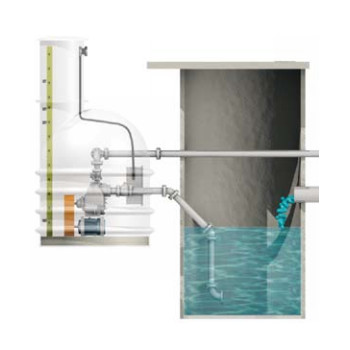
And that's not saying anything about provisions for backup power in case of an electrical outage. We're here to tell you that not only is there a way to make a lift station even more invisible than a submersible, but also longer-lasting and easier to maintain. The answer is found in the Gorman-Rupp Reliasource below-ground station configuration, using self-priming Super T Series or Ultra V Series pumps. These stations are available in two diameters: 7.5' and 10'. They come in completely self-contained fiberglass units that can be buried next to the wetwell. The enclosure comes with a water-tight access hatch and entrance tube, providing near-perfect invisibility to anyone passing by. The entrance tube includes an inlet and outlet for the safe and dependable exchange of air by the integral ventilation system (ensuring maximum operator safety). The rest of the station is kept completely out of view -- but also safely separated from the hazards of the wetwell.
Enhancing the safety of the below-ground station is the way it permits operators to conduct any required maintenance or service on the pumps without ever exposing themselves to the wetwell. The pumps use their suction-lift capacity to bring the water up through the suction line before discharging it to the force main. Thus the pumps stay wet on the inside but dry on the outside. And they are driven by ordinary TEFC, ODP, or XP motors powering the pump through a V-belt configuration. That means there's no depending on exotic motor types or cooling jackets, nor is there any need to pull the pumps for routine inspections. In fact, virtually all maintenance, service, and repair can take place with the pumps and motors remaining safely in place inside the station. A pump could be completely rebuilt in place without ever removing the pipes or lifting the casing. Don't overlook the fact that a self-priming pump can shave 25' off the excavation required for a dry pit -- so even where a deep wet well is unavoidable, one of these pump stations could bring your operators (and all of their tools) 25 feet closer to the surface.
And these pumps last, too. External sight glasses make it easy to check on seal and bearing oil levels with just a glance, and external shimless adjustment means that the pumps can be maintained in peak efficiency without any operator having to encounter the liquid inside. The typical configuration for a Gorman-Rupp municipal self-priming pump will pass a 3" diameter spherical solid, and if the worst-case scenario comes about, the pump can be unclogged through the easy-access coverplate and put back into service in a matter of minutes, at a fraction of the time it takes to unclog a submersible (and none of the cost of calling a service truck). All told, it's not unusual for these pumps to remain in service for decades at a time with little more than some routine inspections and the occasional oil change. And even when you're pumping the worst, you can rest assured that most of your pump is completely dry and the motor will never be submerged (plus, material upgrades to austempered ductile iron and high-grade stainless steel are available if you really need them).
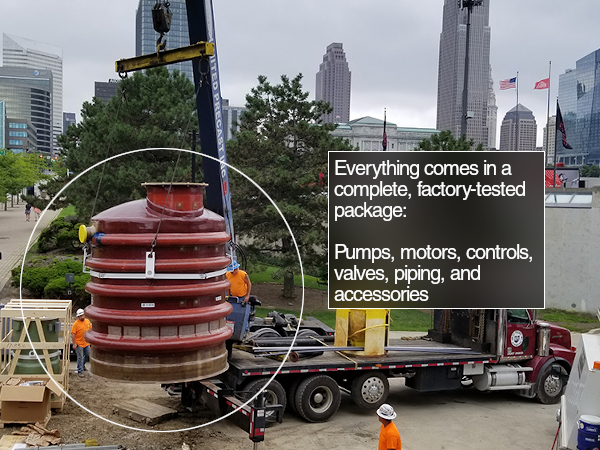
Best of all, the whole package is factory-assembled and tested before shipment, so you can be confident in a quick installation and a dependable startup. So if your first priority is to keep your lift station out of sight, the Gorman-Rupp below-ground station option is the best choice for a comprehensive solution that values operator safety, low visibility, and long-term reliability. Contact us for more information or for a look at the options.
Easier ammonia measurementIowa's revised water-quality standards are forcing some lagoon systems to face tougher limits for ammonia than they're used to observing. If you're in that boat, consider ATI's Q46N dissolved-ammonia monitor, which permits you to monitor ammonia with a simple, on-line monitor. The system is simple and compact, and it costs a lot less than competitive instruments. Contact us for specs, pricing, and options for a trial installation. A free tool for budget savingsIt's becoming clear that many municipal budgets are going to be under stress in the coming year, as the pandemic raises many costs while it also cuts into revenues. It's not always easy for water and wastewater utilities to cut operating expenses while remaining in compliance, but nobody wants to cut salaries at a time like this, either. We'd like to offer access to a tool that might help. Thanks to our new relationship representing Hoffman and Lamson blowers to wastewater customers in Iowa, Nebraska, and South Dakota, we can offer you access to audits of energy use that can uncover major aeration blower power savings and help with cost reductions. Typical wastewater sites can experience an energy savings of 20% or more by taking action based on these audits. (Find out what's involved.) In addition, incentives can help fund recommendations from our audit. These audits are a $3,995 value, but for a limited time, we can have those charges waived and offer audits to qualified plants for free. We would be happy to present this to you and discuss further, so please let us know if you are interested. We realize that due to Covid-19, most site visits are restricted. We can provide you with a program overview and all of the information you require to make an informed decision on the value to your plant via a video presentation over Skype, Zoom, or Teams at your convenience. Then, when the time is right for travel, we can get your energy audit on the calendar. Our team wishes you good health and safety at this time. Please let us know anytime if we can be of service to you. Hoffman and Lamson bring more than 100 years of experience in quality and innovation to your blower needs. Contact us to get started. A simple diversionFor those applications where simple flow diversion is needed in an open channel, stop gates are an economical measure for getting the job done. We have supplied Golden Harvest stop gates and frames on projects serving in applications like headworks (where they can be used to isolate a channel containing a mechanical bar screen or a grit trap, for example) and disinfection systems (where a UV disinfection channel might need to be taken out of service for lamp replacement), but also in flood-control and storm diversion applications as well. Aluminum and stainless steel construction are both available. Contact us for more information on stop gates anytime. Biological nutrient removal (BNR) aided by bafflesFor those operators and engineers looking to improve biological nutrient reduction by separating aerobic from anoxic zones, we would like to highlight the effectiveness of creating that separation by using tank baffles from Environetics. They're literally flexible (in the sense that they're mostly composed of geomembranes), of course, but they're also installation-flexible -- they can be retrofitted into existing concrete structures or moved, altered, and adapted to suit changes in condition. The pricing is highly economical, the materials are durable and long-lasting, and the installation process is much easier than for any other type of control structure. Contact us for more information. Virus detection at the wastewater treatment plantA story in Water and Wastes Digest says that a Dutch city of 150,000 found evidence of coronavirus in its wastewater before any cases had been otherwise detected in the city, just a week after the virus was first detected in the Netherlands. The good news: This suggests that wastewater-level detection could provide useful surveillance to public-health experts as an accessory to the test, isolate, and trace protocols being discussed as the best means of dealing with the virus until vaccines are available. More information gathered at the community level can help identify hotspots that might be experiencing asymptomatic spread. The bad news: It still isn't clear whether the virus can actually be transmitted in wastewater, either in the liquid flow or otherwise. Drinking water remains safe, but we also need to show concern for the public-works employees responsible for the collection and treatment of wastewater. They are invisible -- but essential -- front-line workers protecting public health, and they need adequate protection, too! We have always believed that one of the most important ways to protect workers in the wastewater sector is to keep them in safe, above-ground locations wherever possible -- where fresh air and limited exposure to sewage can preserve their health. With the uncertainty surrounding the transmission of COVID-19, that's suddenly more true than ever. See our presentation "Revenge of the Mole People" for a list of 25 related reasons why it's important to keep wastewater workers above-ground (or as close to the surface) as possible, and 10 ways that lift stations can be designed to maximize that potential to stay high, safe, and dry. We're here to help: Any platform, any deviceWe realize that social distancing is going to be with us for a while, so to accommodate your needs, we're ready to help you on whatever platforms or devices are most helpful to you. You can reach us in any of the following ways:
Update to the diaphragm pumps in our online storeOur online store section featuring portable diaphragm pumps has been freshly updated. These are great machines for moving fluids that don't like to flow easily -- mud, slurries, sludge, and the like. They're great for in-plant applications at WTP and WWTP facilities. Straight centrifugal pumpsNewly updated on our website: AMT heavy-duty straight centrifugal pumps. These tough little pumps come in 2" and 3" sizes and are great for applications like circulation and industrial fluid transfer. Order them online anytime, day or night, through our online store. Most are ready to ship in about two business days. For more news, visit the Water News Archives from 2005 through today
|




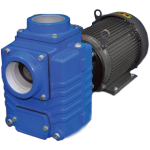 AMT has introduced three new self-priming electric pumps,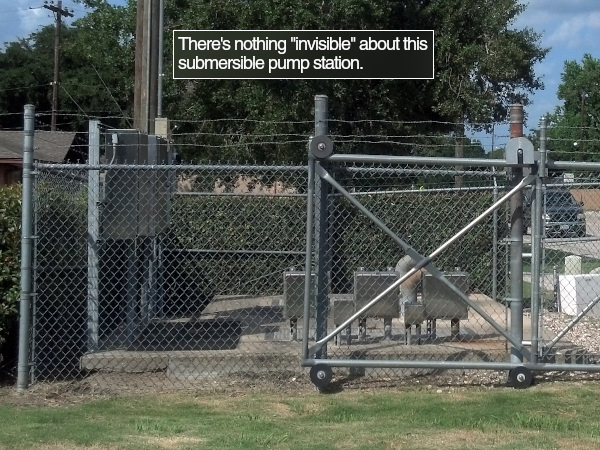
DJ Gongol & Associates, Inc.
4328 North Dawson Avenue | PO Box 180 | Cumming, IA 50061
515-223-4144 | 402-965-1306 text | 515-981-0581 fax
info@gongol.net


